Manual transport holds you back. T‑CAN moves you forward.
Manual can transport slows production, causes errors, and increases costs - especially in high‑speed spinning mills facing labor shortages. T‑CAN solves this with self‑driving cans that automate transport between machines, ensuring precise, reliable, and on‑time material flow for maximum efficiency.
T‑CAN offers key operational advantages for your spinning mill:
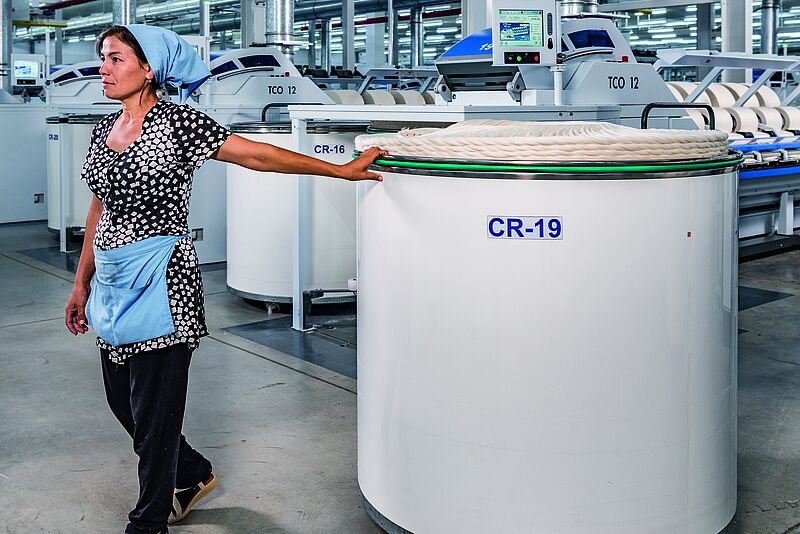
Reduced labor costs
Cut operational expenses by minimizing manual intervention and repetitive handling tasks.
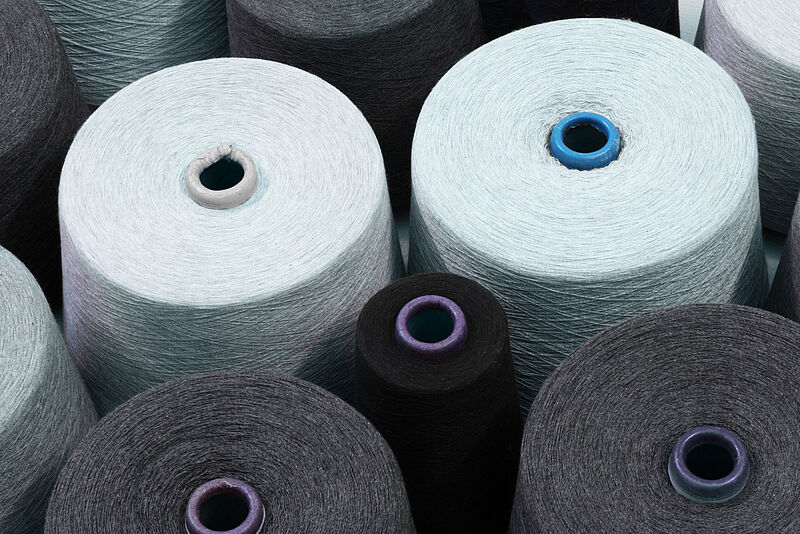
Higher yarn quality
Improve blend consistency thanks to precise, automated material allocation and controlled can management.
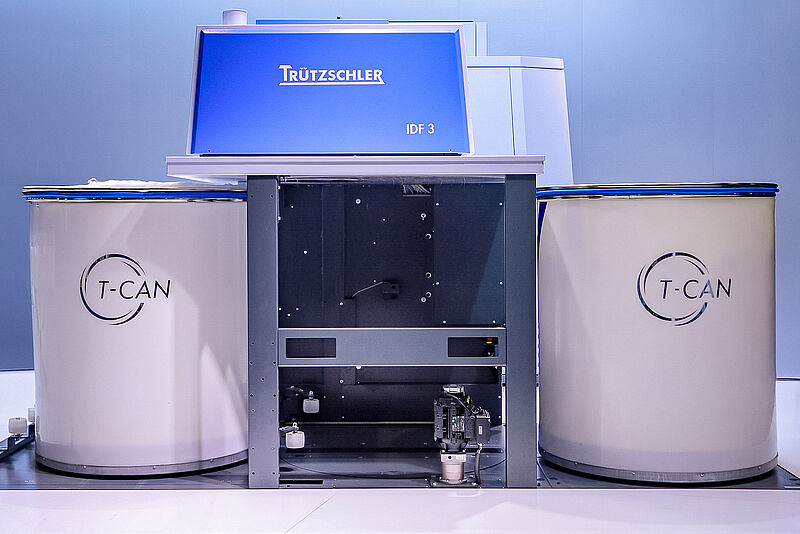
Machine efficiency boost
Increase productivity with uninterrupted material flow, fewer stoppages, and optimized machine utilization.
How it works
T-CAN is engineered for the real-world environment of spinning mills, where dust, vibration, long shifts, and high uptime demands are part of everyday operations. By using a simple but effective routing system, intelligent software, and real-time sensors to manage can transport with precision, T-CAN solves these issues.
Here's how each component works together to ensure seamless operation:

Server infrastructure and route‑network
Connects all machines and stations, enabling intelligent navigation between carding and draw frame sections.
T‑CAN automated guided vehicle (AGV)
A standard sliver can combined with a compact AGV, turning it into an intelligent self‑driving transport unit.
Monitoring and control software
Centralized, intuitive control to monitor can positions, battery status, and routes in real time.
Automation enablers
Integrated automation functions ensure uninterrupted material flow such as semi-automatic creel functionality, self-charging and cleaning.

Proven performance
One of the first adopters of T-CAN was JINGYI, a high-tech textile producer, specializing in vortex spinning technologies, based in Shengze, China.
Following a successful pilot phase, during which the system demonstrated its efficiency and reliability under real production conditions, JINGYI decided to take the next step. The company placed a large-scale order to automate can transport across more than 120 TC 26i cards and 240 TD draw frames.
Since its implementation, T-CAN has consistently proven itself as a robust, reliable, and operator-friendly solution.